
Tech Neck Is Becoming a Summer Health Problem — Here’s How to Fix It
Summer used to mean movement. It meant running outside until dark, building things in the backyard, riding bikes until dinner was called. For millions of kids today, summer means something different: it means six, eight, sometimes ten unstructured hours a day with a phone, tablet, or computer — and the postural damage accumulating in those hours is something most parents aren't thinking about until symptoms appear.
Tech neck — the clinical term for forward head posture caused by prolonged device use — is not a minor inconvenience or a quirky modern complaint. It is a structural problem affecting developing bones, muscles, ligaments, and nerves. And summer, when screen time rules with no school schedule to interrupt it, is when it gets significantly worse.
As practitioners, we are seeing more kids in our offices with neck pain from phone use, upper back tension, headaches, and rounded shoulders than at any point in the last decade. Understanding why this happens — and what to do about it — is one of the most important things a parent can know right now.
What is tech neck, and why does it hit kids harder?
Tech neck describes a pattern of forward head posture where the head drifts in front of the shoulders rather than resting balanced over the spine. It develops gradually, driven by the repeated downward tilt required to look at phones, tablets, and laptops held below eye level.
The physics are alarming. An adult head weighs roughly 10–12 pounds in neutral position. For every inch the head moves forward from center, the effective load on the cervical spine approximately doubles. At a 60-degree forward tilt — the typical angle when looking at a phone in the lap — the spine is managing a force equivalent to 60 pounds pressing down on the neck. Now picture a child's developing spine absorbing that load for six-plus hours a day, every day of summer.
Children are more vulnerable than adults for one critical reason: their bones are still forming. Bone tissue in children and adolescents is actively being shaped by the mechanical forces placed on it — a principle called Wolff's Law. This means that prolonged postural stress during developmental years doesn't just create temporary muscle tightness. It can alter the actual shape and curvature of the spine as it develops. The rounded shoulders and flattened cervical curve that look like a habit in a teenager can become a structural reality in a young adult.
"The forces shaping a child's posture this summer are the same forces shaping the spine they'll live in for the next seventy years."
How to spot the signs of tech neck in your child
Tech neck doesn't announce itself as a diagnosis. It shows up in patterns most parents recognize but may not connect to screen time. Knowing the signs early is how you intervene before postural habits calcify into structural problems.
- Head that consistently sits in front of the shoulders when standing or sitting
- Rounded shoulders that roll forward even at rest
- Frequent complaints of neck stiffness, soreness, or "neck pain from phone" use
- Headaches that start at the base of the skull and radiate forward
- Upper back tightness between the shoulder blades that doesn't go away with rest
- Shallow breathing or the habit of taking short, chest-only breaths
- Fatigue and low energy that seems disproportionate to activity level
Why does forward head posture affects more than just the neck?
One of the most important things to understand about forward head posture is that it is never just a neck problem. The cervical spine sits at the top of a system. When it moves out of alignment, every structure below it compensates.
The thoracic spine — the mid-back — rounds to accommodate the forward head. The rounded shoulders collapse the chest and restrict the ribcage. The diaphragm, which relies on ribcage expansion to do its job, loses range of motion. Breathing becomes shallow and effortful. Less oxygen reaches the brain and muscles per breath. Kids with significant tech neck often feel inexplicably tired, foggy, and unmotivated — not because they're lazy, but because their posture is literally limiting their oxygen intake.
This is why "how to fix neck posture" is one of the most searched health phrases among parents of teens. They're watching their kids slump into screens and intuitively sensing that something deeper than rudeness or laziness is happening. They're right. And the solution starts with restoring the thoracic extension that forward head posture destroys.
Why is stretching the thoracic spine the best way to fix neck posture?
Most tech neck advice focuses on the neck itself — chin tucks, neck stretches, and strengthening exercises. These have their place. But they address the symptom rather than the root cause, which lives in the thoracic spine.
The thoracic spine — the 12 vertebrae of the mid and upper back — is the structural anchor of posture. When it loses extension and rounds forward, the head follows. The cervical spine cannot maintain a healthy curve if the thoracic spine beneath it is collapsed. This is why forward head posture exercises that target only the neck produce limited and temporary results.
Restoring thoracic extension is the best way to fix neck posture from the ground up. When the mid-back opens and lifts, the shoulders can retract naturally. The chest opens. The head drifts back over the spine without conscious effort. The cervical curve is restored not by force but by restoring the structural conditions that support it.
This is precisely why extension-based passive therapy — using a tool that gently and progressively mobilizes the thoracic spine — is one of the most effective interventions available for tech neck relief in both kids and adults.
How the Backbridge provides daily tech neck relief
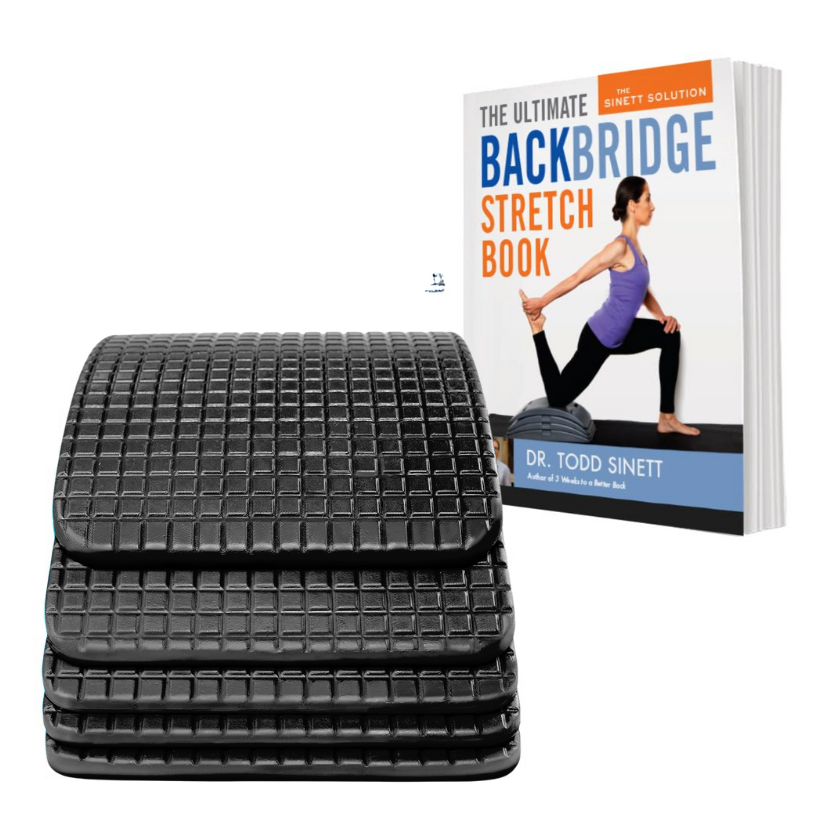
The Backbridge is a graduated spinal extension device designed around one fundamental principle: that the human spine needs regular, gentle extension to maintain the curves that keep it healthy. It works by allowing the user to rest over a precisely shaped arch, using gravity and body weight to passively mobilize the thoracic and lumbar spine without force, effort, or complicated technique.
For kids and teens dealing with tech neck, the Backbridge works as a passive recovery tool that counteracts the hours of forward flexion accumulated during screen time. Just four minutes a day — placed strategically after a long session of device use — begins to restore the thoracic extension that rounded shoulders and forward head posture progressively erode.
The graduated arch system matters particularly for younger users. Children can begin at the gentlest level — a mild, supported curve — and progress gradually as their thoracic mobility improves. There is no strain, no strain-through-force, and no pain required. The spine responds to consistent, gentle input over time, and the Backbridge is designed precisely for that kind of cumulative, sustainable change.
From a chiropractic perspective, it extends the benefit of any structural correction into the home — where the postural damage is actually happening. From a PT perspective, it creates the thoracic length and chest opening that makes every subsequent forward head posture exercise dramatically more effective, because the thoracic spine is no longer fighting against itself.
The 4-minute daily Backbridge routine for tech neck relief
The best time to use the Backbridge is immediately after a prolonged screen session — treating it as a reset rather than a chore. Build it into the routine the way you'd build in a snack or a water break. Four minutes is genuinely all it takes to begin shifting the tissue environment.
Progress to higher arch levels only when the current level feels comfortable and unrestricted — typically after one to two weeks of daily use. Most kids and teens notice meaningful reduction in neck stiffness and upper back tension within the first two weeks of consistent daily practice.
What parents can do beyond the Backbridge
The Backbridge addresses the damage. But prevention matters just as much. A few structural changes to how kids use devices this summer can significantly reduce how much tech neck develops in the first place.
Raise screen height so the top of the monitor or tablet is at or just below eye level — this eliminates the downward chin-tilt that drives neck pain from phone use. Enforce a device break every 30 to 45 minutes where kids stand, move, and look at something farther than arm's length away. Encourage outdoor time not just for exercise but for posture reset — walking upright, looking at the horizon, breathing fully. And model the behavior yourself: children are far more likely to adopt posture habits when they see adults prioritizing them too.
Tech neck relief isn't about eliminating screens. It's about building the structural resilience to coexist with them — and the Backbridge is the most accessible, passive, and effective daily tool we know for doing exactly that.
FAQs: Frequently asked questions: