
Recovery Is the New Fitness: Why 2026 Is the Year We Finally Stopped Grinding and Started Healing
For the better part of a decade, fitness culture worshipped at the altar of more. More reps. More miles. More intensity. More suffering. The badge of honor was the 5 a.m. workout, the back-to-back training days, the grind-until-you-break mentality that flooded every corner of social media with sweat, strain, and the implicit message that if you weren't exhausted, you weren't working hard enough.
That era isn't just fading — it's over.
In 2026, the most forward-thinking athletes, wellness professionals, and everyday people are no longer asking "how hard did I push today?" They're asking "how well did I recover?" And that shift — quiet but seismic — is rewriting the entire wellness industry.
The Great Pivot: From Performance to Restoration
Search trends don't lie. Queries around "recovery tools," "muscle recovery," and "wellness recovery trends" have surged dramatically over the past two years. Cold plunge tubs are showing up in suburban backyards. Infrared saunas are packed on Friday evenings. Mobility work and breathwork classes are waitlisted. The conversation has moved from PRs and peak output to longevity, restoration, and the kind of health that actually compounds over time.
What's driving this? A few things converged at once.
First, the science caught up with what many athletes already suspected: recovery is training. The adaptation your body makes — stronger muscles, faster reflexes, better cardiovascular efficiency — doesn't happen during the workout. It happens afterward, in the hours and days when your body repairs, rebuilds, and integrates the stress you placed on it. Push harder than your recovery capacity allows, and you don't get stronger. You just accumulate damage.
Second, people are tired. Genuinely, structurally tired. The cultural obsession with productivity and hustle has left millions of people running their nervous systems hot for years. Chronic stress, poor sleep, and non-stop stimulation have created a population that is perpetually stuck in sympathetic overdrive — the physiological state of fight-or-flight — with almost no intentional time spent in parasympathetic recovery mode.
That phrase — parasympathetic nervous system — has become one of the fastest-growing wellness search terms in 2026, and for good reason. Understanding the difference between your body's stress response and its rest-and-repair response is turning out to be foundational to everything: mental health, physical recovery, pain management, sleep quality, immune function, and long-term longevity.
What Athletes Already Know (That the Rest of Us Are Just Learning)
Elite athletes have long understood that recovery is a non-negotiable pillar of performance. What's changed is that this knowledge is finally trickling into mainstream wellness culture.
Ask any professional in endurance sport, team athletics, or strength training what separates good athletes from great ones, and recovery almost always comes up. Not just passive rest, but active recovery — intentional practices designed to accelerate the body's return to a ready state. Ice baths. Compression. Massage. Sauna protocols. Mobility sessions. Breathwork. These aren't luxuries anymore. They're strategy.
The physiology behind this is straightforward. Hard training creates microdamage in muscle tissue and increases cortisol, inflammation, and nervous system activation. Muscle recovery isn't just about those fibers healing — it's about downregulating the entire stress response so the body can shift from breakdown to buildup. Every tool in the recovery toolkit, whether it's a cold plunge, a sauna session, or targeted stretching, is essentially a method for sending one signal to the nervous system: it's safe to rest now.
That signal is more powerful — and more necessary — than most people realize.
Stress, Muscle Guarding, and the Body's Hidden Tension
Here's something that rarely gets talked about in fitness spaces: most people are carrying chronic tension they can't feel.
When the nervous system perceives threat — whether that threat is a physical injury, emotional stress, or just the relentless pressure of a busy life — it triggers something called muscle guarding. The body contracts, braces, and tightens as a protective response. In an acute situation, this is helpful. But when stress becomes chronic, that muscle guarding becomes the baseline. The body forgets how to fully release.
The result shows up as tight hips, a perpetually stiff neck, shallow breathing, and that familiar low-grade ache that lives in the upper back and shoulders. It shows up as reduced range of motion that you chalk up to aging. It shows up as the kind of fatigue that sleep doesn't seem to fix.
This is where spinal health becomes central to the recovery conversation — and where most people are leaving significant wellbeing on the table.
Why Spinal Decompression Belongs in the Recovery Conversation
The spine is not just a structural column. It's the primary highway of the nervous system, and the condition of that highway has everything to do with how efficiently your body can move into recovery mode.
Modern life compresses the spine relentlessly. Sitting, slouching, hunching over screens, carrying tension in the shoulders and lower back — all of it loads the vertebral discs and surrounding musculature in ways the body wasn't designed to sustain for hours every day. Over time, this compression doesn't just create pain. It interferes with nerve signaling, reduces circulation to the discs, and keeps the surrounding muscles in a constant state of low-level guarding.
Spinal decompression — gently creating space between vertebrae and releasing the tension along the spinal column — is one of the most underutilized recovery tools available. When the spine decompresses, something interesting happens: the nervous system responds. Breathing deepens. The parasympathetic state becomes more accessible. Muscle tension in areas far from the spine — the hips, the hamstrings, even the jaw — begins to release.
This is the connection between spinal health and whole-body recovery that the wellness industry is only beginning to take seriously.
Spotlight: Backbridge and the Case for Passive Recovery Done Right
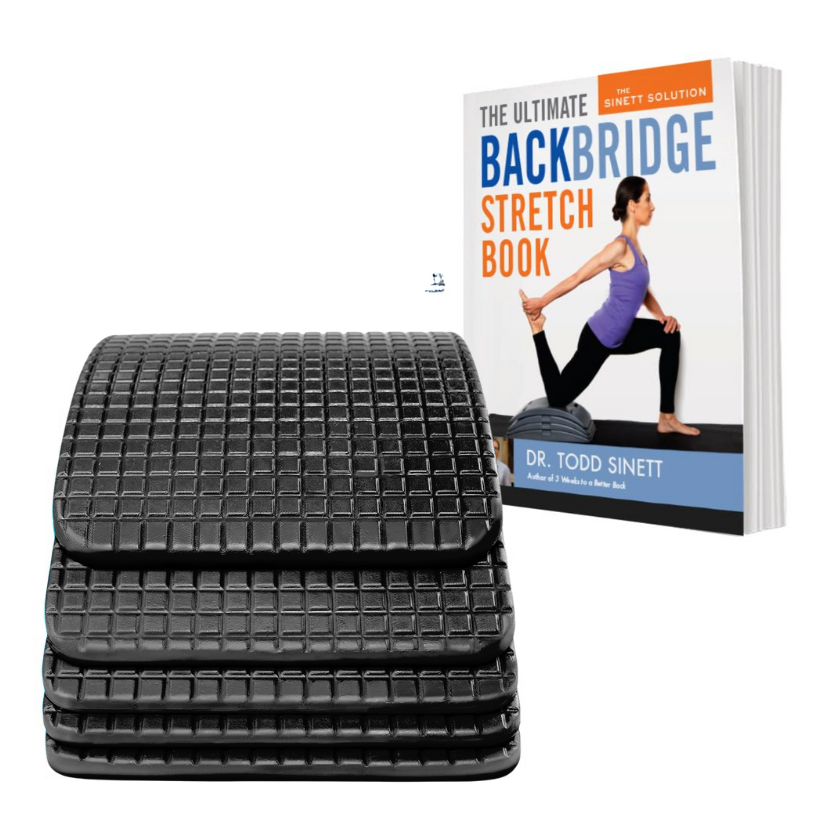
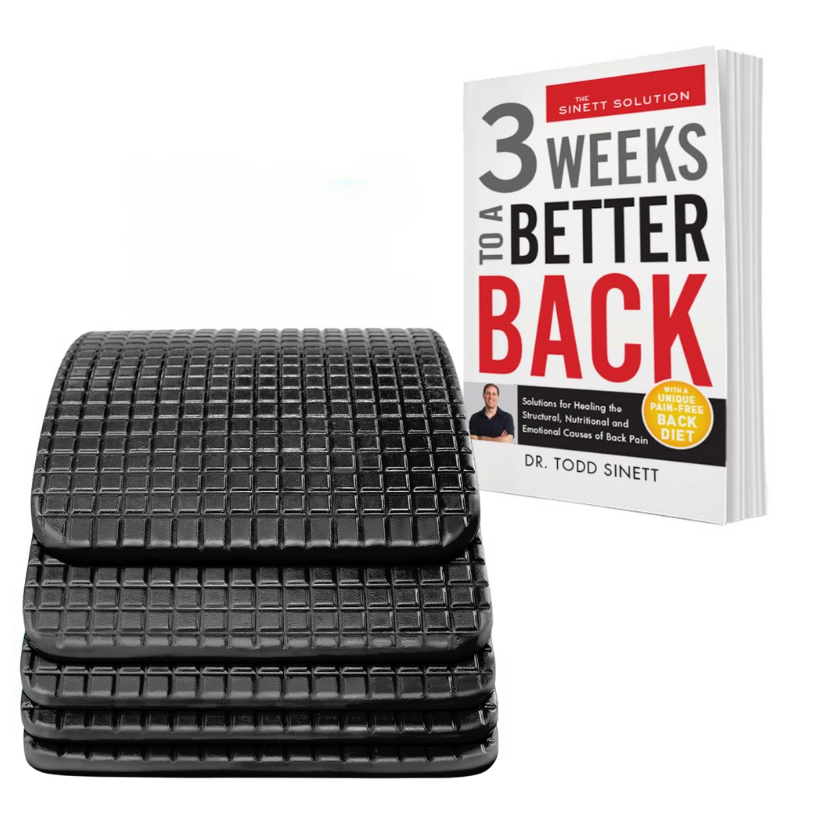
In a recovery landscape crowded with cold plunges, infrared saunas, massage guns, and compression boots, Backbridge occupies a unique and quietly essential niche. It doesn't require electricity, subscription fees, or thirty minutes of cardiovascular effort. It asks only that you lie down on it.
And that simplicity is precisely the point.
Backbridge is a passive spinal extension tool — a gently curved device designed to support the thoracic and lumbar spine in a natural extension position that modern posture almost never allows. When you rest on it, gravity does the work. The spine lengthens, the chest opens, the anterior musculature releases, and the compressed discs get a moment of decompression they've likely been waiting for all day.
For people doing recovery work, the Backbridge fits naturally alongside every other modality in the toolkit. Use it before a sauna session to open the chest and release spinal tension. Use it after a workout to begin the downregulation process before your cool-down stretching. Use it in the evening as part of a breathwork or parasympathetic activation routine. Use it in the morning to counteract the spinal compression that accumulates even during sleep.
What makes Backbridge particularly valuable in the recovery conversation is that it directly addresses the nervous system, not just the muscles. Spinal extension activates proprioceptors along the vertebral column that communicate safety and groundedness to the brain. When combined with slow, diaphragmatic breathing while on the device, it becomes one of the most effective low-tech tools for shifting the nervous system from sympathetic activation toward the parasympathetic rest-and-repair state.
Athletes who've added Backbridge to their recovery stack consistently report the same things: less stiffness, better sleep, improved breathing mechanics, and a reduction in the diffuse background tension that accumulates over hard training blocks. People who've never set foot in a gym report similar outcomes — less back pain, better posture, a sense of physical ease they'd forgotten was possible.
Doing Less as a Performance Strategy
There's a counterintuitive truth at the heart of the recovery movement: sometimes the most productive thing you can do for your body is nothing.
Not lazy nothing. Intentional nothing. Deliberate stillness. Scheduled restoration.
The research on overtraining, burnout, and chronic stress all points to the same conclusion — the body has a finite recovery capacity, and when training load consistently exceeds that capacity, adaptation stops and breakdown begins. This isn't just a physical phenomenon. Cognitive performance, emotional regulation, immune function, and hormonal balance all degrade under conditions of insufficient recovery.
The solution isn't to stop challenging the body. It's to match the challenge with an equally serious investment in restoration. Cold exposure to reduce inflammation and train vascular response. Heat therapy to drive circulation and growth hormone release. Mobility work to maintain joint health and nervous system flexibility. Breathwork to directly modulate autonomic tone. And passive spinal decompression tools like Backbridge to address the structural compression that accumulates whether you're training hard or just living a modern life.
The Wellness Recovery Trend That's Actually Here to Stay
Trends in wellness come and go. Detox teas, vibrating foam rollers, and wearable devices that promise to decode your biology have all had their moment. Most fade because they overpromise and underdeliver.
Recovery is different, because it's not a trend in the fad sense — it's a correction. It's the industry finally catching up to the physiology, acknowledging that the body is not a machine to be optimized through sheer force of will, but a living system that requires balance, restoration, and respect.
The people building sustainable fitness and wellness practices in 2026 are the ones who've internalized this. They're not training less. They're recovering more — and discovering that the two are inseparable.
A cold plunge after a hard workout. A sauna session on a rest day. Ten minutes of breathwork before bed. And a few minutes on a Backbridge, letting the spine open, the chest expand, and the nervous system remember what it feels like to be at rest.
That's not giving up on performance. That's what performance actually looks like when you're playing a long game.
Recovery isn't the opposite of fitness. It's the foundation of it.